The Brief History
Civilisation had existed in Peru for many thousands of years, with the earliest dating back to 6000BC. The inhabitants are merely nomadic hunters that dwell in areas near the borders of Chilca and Paracas provinces and in the uplands of Callejon de Huaylas (1). Over thousands of years, these civilisations eventually became the Inca Empire – an advanced community with cultivation methods, pottery, craftwork and jewellery. Gradually, the Inca Empire expanded to the Andes, and reached its peak around 1450 – late 1500, becoming the largest empire of the pre-Columbian America (2).
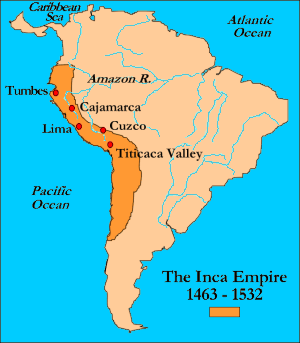 Map to show the expansion of the Inca Empire | 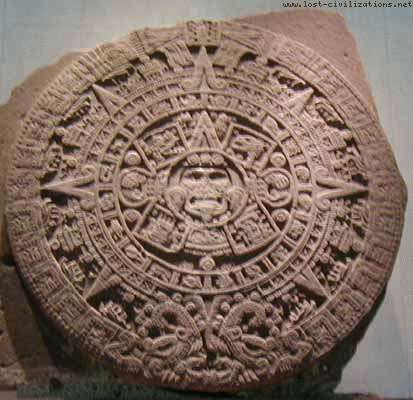 A calendar from the Inca Empire |
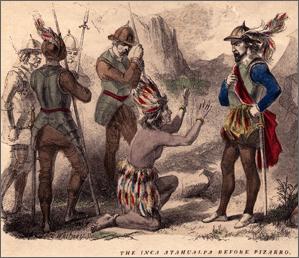
The glory of
the Incas, however, only lasts for about 100 years. The kingdom of Spain invaded
the state of Cajamarca in 1532 (3). Three years later, the city of Cuzco was established
as the new Spanish colony. In the meantime, Lima became a centre for institutions
related to politics, administration and commerce (4).
Peru achieved independence in July 28, 1821 (5) due to rebellion for independence in the early 1800s, yet full recognition of Peru’s sovereignty did not happen until 1879. After gaining independence, Peru was involved in frequent conflict with surrounding countries, including Bolivia, Chile, and Ecuador (6). It was only in the early 1900s that the politics and economy in Peru were stabilised due to social reforms introduced by the government.
Culture of Peru
The culture of Peru has a diversity of traditions and customs, as it has a multiethnic country, yet it is mainly based on the Hispanic and Amerindian cultures (7). It is influenced by coast European culture, including the colonial Hispanic culture to European Romanticism after Peru’s independence. In the early twentieth century, a movement called “indigenismo” raised awareness to the traditional ways of the indigenous culture. | 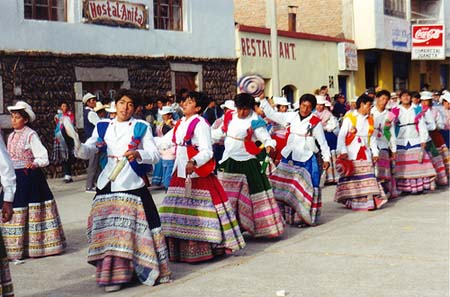 |
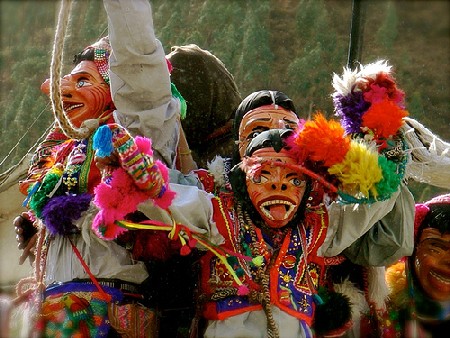
Peru’s celebrations are based on the legends of the towns, which often include music, dances and food. Most of them are religious holidays like Christmas, but there are others to celebrate the merge of indigenous beliefs with Christianity. Today, most people in Peru are Roman Catholics (8).
|  |
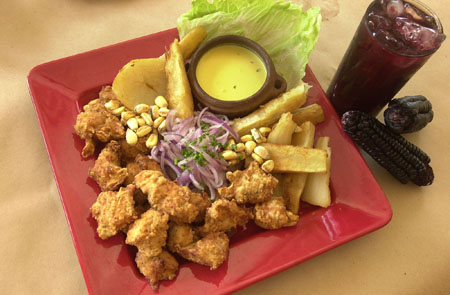
Peru has a varied cuisine which is a unique combination of Inca and Spanish culinary. It uses different types of ingredients, including maize, tomato, potatoes and uchu. The Creole cuisine was also developed in Lima as immigrants introduced food from their own countries (9).
|  |
Points of Interest
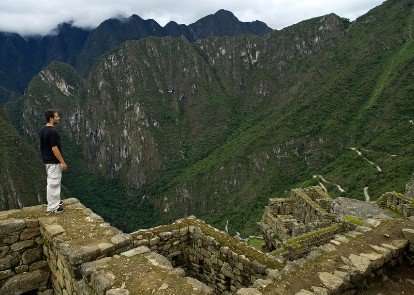
The Machu Picchu, also known as ‘Lost City of the Incas’, is a fifteenth century Inca located at an alitutde of 2 430 metres above sea level between two mountains (10). It is believed that Machu Picchu an estate for an Inca emperor called Pachacuti, yet not much is known about the ancient city. It was recently named as the official seven new wonders of the world (11).
|  |
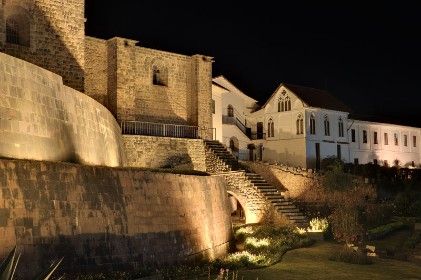
Cuzco is the historical capital of the Inca Empire, and is the oldest continuously inhabited city in South America. The narrow cobblestone streets are filled with massive Inca-built walls (12), as well as plazas filled with the people of Incan and Spanish descent.
|  |
 Travel Advice
(The following information is based on the Department of Foreign Affairs and Trade website)
|  |
|  |
|  |
